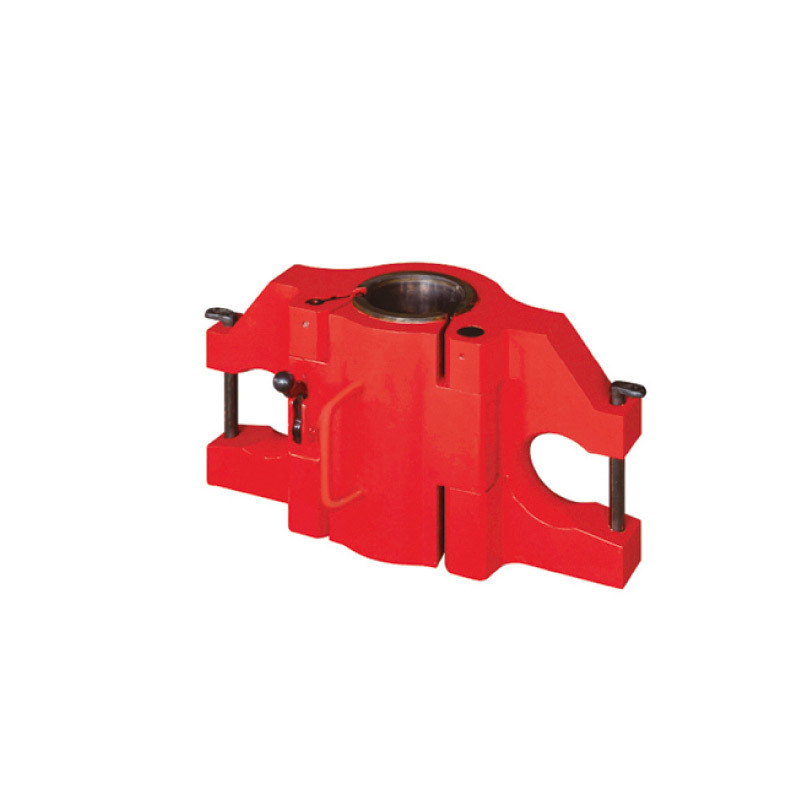
Tripod
A tripod is a wellhead tool used during drilling and well completion operations to directly suspend the pipe string. It is connected to the hook and can suspend different pipe strings with different diameters. According to the type of suspended pipe string, tripods can be classified as drill pipe tripods, casing tripods, and tubing tripods; according to the structure of the tripod, there are side-opening double-safety type, open-type double-safety type, and locking ring type. The locking ring type is less used.
In drilling sites in China, the CSD group-type tripods are widely used. It is mainly composed of the main body, the hinge, the opening pin, the locking handle, the balance tightening screw, the upper and lower locking pins, etc. The bearing steps have platform steps and 18-degree conical steps. 1. Side-opening tripod
The LCD type side-opening tripod is composed of the main body and the valve. The valve is connected to the main body through the pin shaft and functions to open and close the diameter of the tripod hole. When the valve is closed, it is automatically locked by the upper and lower locking pins. When opening, press the locking handle and pull slightly outward. The upper end face of the main body has double-safety limit blocks. When the upper end face is under load, the pipe string presses the limit blocks, and the valve cannot be opened or closed. Only when there is no load on the pressure-bearing surface of the main body, the limit blocks can move up and down, allowing the valve to open and close freely. The limit blocks play a safety protection role.
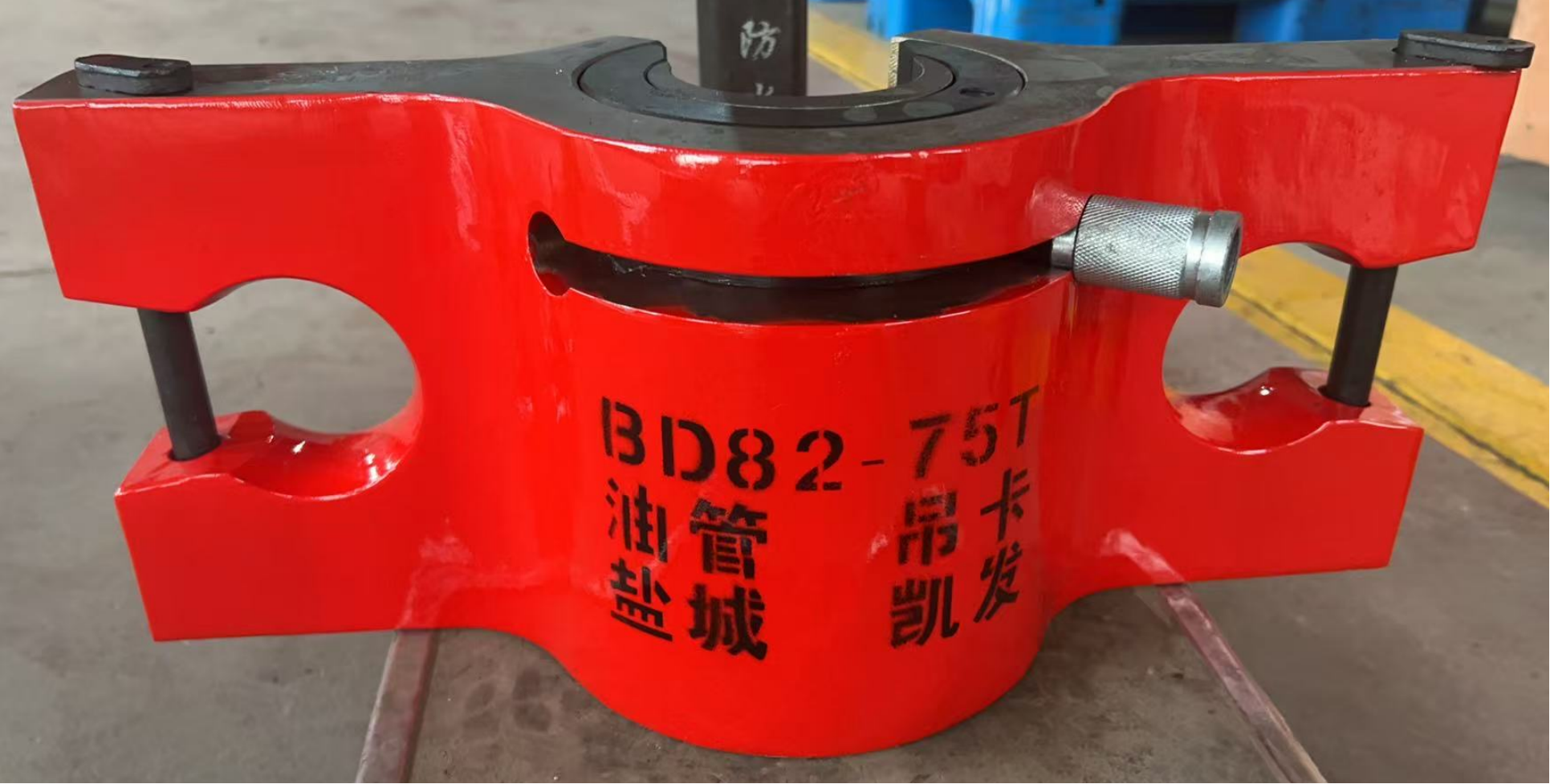
Each tripod comes with a set of safety pins. After the hook is inserted into the ears on both ends of the main body, insert the safety pins to prevent the hook from coming out and ensure the safety during the operation of raising and lowering the pipe string. 2. Open-type tripod
Compared with the side-opening tripod, the open-type tripod is easier to operate. It is mainly composed of the left and right pages of the main body, the lock pin, the safety handle, the valve pin, the spring, etc. The rectangular arms on the outer sides of the left and right pages of the main body can suspend the hook. The lock pin fastens the left and right pages of the main body together. Through the safety handle, it ensures that the lock pin will not open during the up and down drilling process.
3. Use of tripods
(1) Before use, it should be placed in a dry and ventilated place to avoid rusting and damage of the product.
(2) After use, clean the oil, sludge, etc. on the tripod, check for any damage. The inner ring and end face of the tripod should be lubricated frequently with oil and anti-rust oil. Store it in an indoor place with ventilation and dryness. Do not use corrosive cleaning agents.
4. Precautions
(2) The operating temperature should be no less than -40℃.
(3) Do not drop or strike the tripod to avoid deformation and mechanical damage. (5) Do not perform welding, grinding, cutting, drilling, etc. on the main body of the tripod. (6) The worn parts of the force-bearing area exceed 1.5mm, repair or stop using. (7) The specification of the tripod should be consistent with the size of the drill string, the load step should be flat without severe deformation, and the valve pin, safety pin should be lubricated, the valve should be flexible and flexible in assembly, and be safe and reliable. (8) When raising and lowering the drill string or running casing, it is necessary to use the safety plug and small spool. When sitting the tripod, do not slam or hit forcefully, and do not perform the operation of breaking the hook. (9) Do not use beyond the load capacity. Do not use the rope loop to hang and pull heavy objects inside the tripod. (10) When the tripod is sitting on the rotary table, avoid the square plate lock pin and place it straight to make both ends of the tripod bear the load evenly.